Da Vinci myomectomy
What are fibroids?
Uterine fibroids are benign (noncancerous) growths inside the uterus or its walls. While some cause no symptoms, others can affect daily life through pelvic pain, heavy menstrual bleeding, or fertility issues.1 Recognizing these symptoms and speaking with your doctor is an important step in understanding your health.
Fibroids are often diagnosed during a routine pelvic exam. Your doctor may also recommend tests like ultrasonography, which uses soundwaves to create images. These details can help you and your doctor talk through care options that match what matters most to you.1

Types of myomectomy surgeries
When fibroid symptoms disrupt your quality of life, your doctor may recommend a myomectomy. A myomectomy is surgery that removes the fibroid tumors while keeping your uterus. You might choose this option to preserve your ability to get pregnant, protect your reproductive health, or simply to keep your uterus.2
Surgeons can perform myomectomies using a traditional open approach or minimally invasive surgery. Open surgery requires an incision (cut) in your lower abdomen long enough for the surgeon to access the organs and use hand-held instruments. Minimally invasive surgery allows your surgeon to perform myomectomies with no incision or through a few small cuts. The three main types of minimally invasive myomectomy are hysteroscopy, laparoscopy, and da Vinci surgery. In hysteroscopic myomectomy, doctors insert a tiny camera and tool for destroying fibroids into the uterus through the vagina. The tool destroys the fibroids with electricity or a laser beam. A laparoscopic myomectomy requires a few small incisions for surgeons to insert a laparoscope (camera) and long-handled tools. The surgeon removes the fibroids while viewing magnified images on a video screen.2 In a da Vinci myomectomy, surgeons use a robotic system with a high-definition camera. The surgeon guides small instruments through a console. Compared to laparoscopy, surgery with da Vinci means your surgeon is less likely to convert to open surgery.3
What is da Vinci surgery?
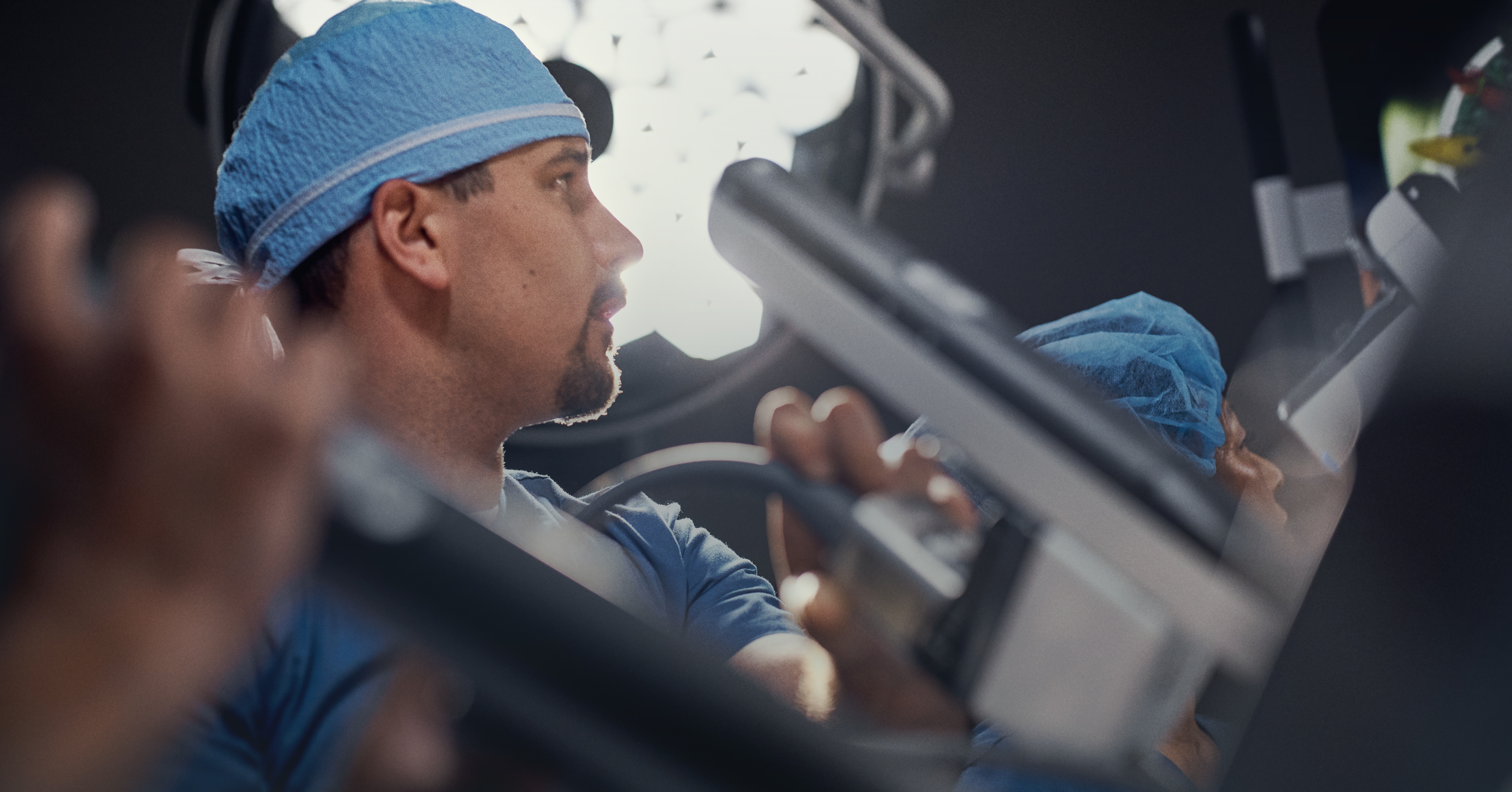
Surgeons can perform myomectomies using da Vinci technology. During a da Vinci myomectomy your surgeon sits at a console next to you and operates using tiny, fully wristed instruments.
A camera provides a high-definition, 3D magnified view inside your body. Every hand movement your surgeon makes is translated by the da Vinci system in real time to bend and rotate the instruments with precision.
It’s important to remember that Intuitive does not provide medical advice. After discussing all options with your doctor, only you and your doctor can determine whether surgery with a da Vinci system is appropriate for your situation. You should always ask your surgeon about his or her training, experience, and patient outcomes.
Da Vinci robotic surgery outcomes
According to studies on myomectomies, da Vinci surgery shows potential benefits compared to open surgery, including:
- Shorter hospital stays3
- Less blood loss during surgery3
Be sure to talk with your surgeon about the surgical outcomes they deliver using the da Vinci system, as every surgeon's experience is different. All surgery involves risk. You can read more about associated risks of myomectomy surgery read more about associated risks of myomectomy surgery here.
Questions you can ask your doctor
- What options are available to address my uterine fibroids? Which is best for my situation?
- What are the differences between open, vaginal, laparoscopic, and robotic-assisted surgery?
- Should I get a second opinion?
- What am I likely to experience after surgery?
- If I decide to have surgery, how can I prepare for it?
- Can you tell me about your training and experience using the da Vinci system?
- How will I feel after surgery?
Additional resources
Da Vinci 5 system overview
Learn more about da Vinci 5, our newest and most advanced da Vinci system.
What to expect
Da Vinci myomectomy brochure
Gynecologic surgery with the da Vinci system
- Uterine Fibroids. Frequently Asked Questions. The American College of Obstetricians and Gynecologists. Web. July 2022.Accessed 8 December 2025.
- Myomectomy. Mayo Clinic. Web. 9 August 2025. Accessed 8 December 2025.
- Results are based on an internal meta-analysis of peer-reviewed literature for robotic-assisted myomectomy procedures published between January 1, 2010 - April 1, 2022. Data on file at Intuitive.